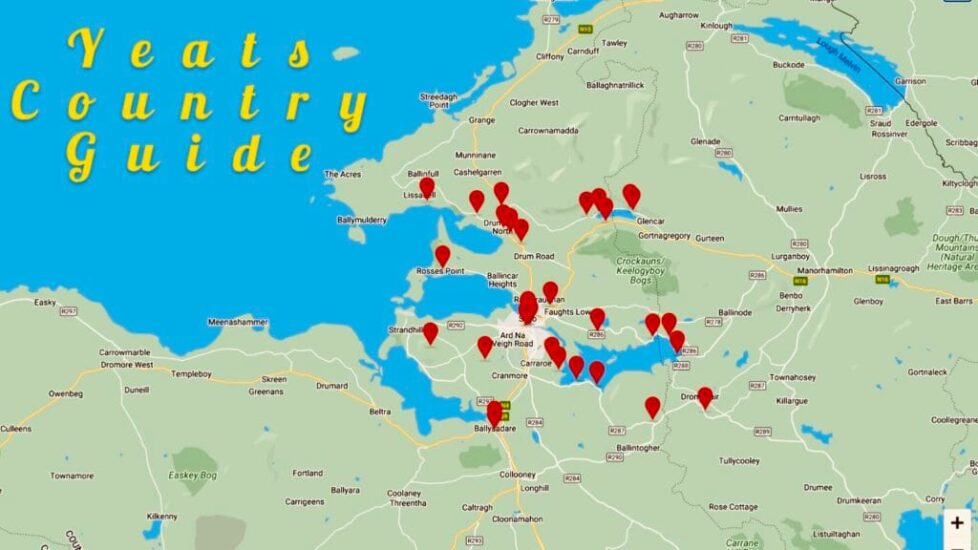
A stellar cast – including Yeats himself – are included on this Yeats Country Guide. This is an audio guide that properly salutes the young poet’s dalliance with the Celtic Twilight. From Sligo Town out to the Coolera peninsula down to Ballysadare, around Loughs Gill and Glencar before taking in Rosses Point, this three-day tour covers all of the essential spots that inspired a young Yeats to write some of his most memorable work. This was the land of heart’s desire to this young romantic and you’ll soon appreciate why he was so captivated by the landscape and lore of the area.
Three days may seem excessive to you a tourist with but a week off. However, when you see what is on offer and the fact that these were the set pieces that inspired one of the finest poets of the last century, it is about right.
Due reverence is required for this pilgrimage of sorts, culminating in a visit to that most famous of graves. The poet expected that horseman to trot, not gallop past him, after all! Besides, if you get the weather, you will want to linger and perhaps read the poems at your leisure, have a picnic or just go for one of the many fine walks from Sligo Walks. Who knows, maybe even enjoy a Wild Atlantic dip?
All tour Points of Interest (POIs) - refresh this page if not loading
Click on each POI above to find out more
Day One takes you out to the sea and up Knocknarea to get a commanding panorama of the Bluestack, Dartry and Ox mountains as well as Donegal Bay. From there, you’ll also be brought to Ballysadare down by the sally gardens before taking in Lough Gill. Extra non-Yeats activities mentioned include exploring Parke’s Castle, taking a trip on the waterbus around Lough Gill and savouring the laidback buzz of Dromahair.
Day Two takes you into deepest Celtic Twilight territory where fairy folk still dwell, the Fianna hunted at the foot of Ben Bulben and Diarmaid was let down by Fionn’s efforts to save him. if that wasn’t enough, you’ll see where the ‘gazelle’ grew up, where he first came across the occult and where he now rests with the long-suffering George. This is definitely not a day to be rushed – you may wish to do the Glencar Trail. N.B. No dogs are allowed at Glencar waterfall.
Day Three takes in a tour of Sligo town itself. There are plenty of interesting non-Yeats sites included, but we do have to show you where the Yeats Memorial Building is, where his statue is and of course where his Pollexfen grandfather ruled the roost. The town is rightly proud of its connections to him and deserves that third day of pilgrimage. Besides the Yeats affiliation, it is a lively buzzing town with an active arts culture similar to Galway, but without the notions/prices!
Getting your bearings
Please familiarize yourself with the route in advance and ensure you read the directions given in the notes where applicable. We have included the GPS coordinates for key locations that you should use with Google Maps along the way. Best do a dummy run of that with some cutting and pasting. The accompanying 17 minute Patrick Carey Yeats Country film is recommended.
Make sure you enjoy a night’s fun in Sligo Town itself the night before or after your pilgrimage begins in earnest. Day One and Day Two could have you finishing up in Dromahair, or Manorhamilton or Mullaghmore, all worthy spots where you’ll feel most welcome. Seafood lovers will enjoy Eithna’s by the Sea in Mullaghmore or Shells in Strandhill. Liam McGettigan’s An Crúiscín Lán B&B in Sligo Town is always a welcome treat to eat and sleep in.
Handy links for each part
This page contains an overview of the complete Yeats Country Guide. Below we have links to the various other parts of it – Day One, Day Two and Sligo Town. This is much easier than scrolling endlessly on just one page! Simply click on the colour-coded section you’d like to know more about.
Seeing as you got this far, we are also throwing in details of two other nearby audio tours of ours you may enjoy – Donegal’s Hallowed Sites and The Bluestack Way. The former invites you to travel to 25 real gems around Donegal while the latter is a three day hiking tour through the Bluestack Mountains you’ll see and be captivated by when up Knocknarea. See? That week slipped by pretty quick, but at least you were armed with a host of interesting audio clips of the north west!
There’s quite a lot of audio which is presented in a linear form as you cycle/drive the route. We’d suggest that you familiarize yourself with the material on each section in advance. Needless to say, it is best enjoyed on good earphones and with your mobile phone’s battery fully charged! If your podcast server allows you to download, do so in a WiFi zone before travelling the next section.
Homework needed!
This guide is primarily intended as a means of enjoying the lore and history of the area. It should be used as a supplement to, not a replacement for, proper map and compass reading. Full advance preparation should be made of the route with Ordnance Survey maps that should be taken with you together with proper equipment, high vis apparel and sustenance.
Preparation for Cyclists
This is a beautiful landscape to cycle around. With current fuel prices, it makes even more sense to consider cycling the route. If you do and are not familiar with Irish roads, please ensure you read up on our Road Cycling Tips prior to attempting the tour. In particular, the N15 which passes by Yeats’s grave in Drumcliffe has fast traffic as does the N4 stretch after Ballysadare.
How best to use this guide on the move
You can enjoy all of the material on your favourite podcast platform from our Audio Archive on Audioboom. Depending on which day of the guide you are on, just look out for the relevant lettering – D1 YC is the first day to Glencar and ST is the Sligo Town guide etc. Each episode will also have number in a linear fashion so D2 YC N16 to Glencar is the first one to look out for and D2 YC Rosses Point is the last episode from that section.
Prior to commencing this epic journey, please download the audio material in a WiFi zone so you can enjoy the audio even if you are in the back end of Leitrim or Lissadell! This route willd definitely have some patches with no signal whatsoever on your phone.
In addition, we have a created dedicated Spotify playlist for The Yeats Country Audio Guide having all the same great material, but with the addition of music to enhance the experience. Look out for our Donegal’s Hallowed Sites playlist on Spotify if you enjoy this guide.
And finally…
This page and each of its associated guides are accurate as of August 2022. Please inform us of any changes/errors or improvements that can be made to this guide in the future: info@racontour.com
If you enjoyed this free guide, please share it on social media and if feeling extra generous, write a review in Tripadvisor. Thanks!
If you did not enjoy it, we want to know as well – just don’t be too blunt in your assessment please!
Scroll through the Spotify playlist – definitely the best way to enjoy it all with the addition of stars like W.H. Auden, The Waterboys et al.
Have a great time – we wish you safe cycling/driving, good weather and an abundance of happy memories.
Jack Ward Racontour Productions Heritage Guides division August 2022
Discover the Magic of Irish Seasons: Traditions and Changes
Experience the enchanting shifts of Irish seasons, rich in traditions and cultural changes that connect the past
with the present. Discover the magic today!
Spring in Ireland: Traditions and Celebrations
As the chill of winter begins to wane, Ireland bursts into a vibrant array of colors and renewed life. Spring in
Ireland is a time of rebirth and rejuvenation. The season starts with St. Brigid’s Day on February 1st, marking
the beginning of the Celtic spring. St. Brigid, one of Ireland’s patron saints, symbolizes fertility and the
arrival of longer, warmer days. Traditionally, Irish families weave St. Brigid’s crosses from rushes, believed
to protect homes from fire and evil spirits. These crosses are hung in homes and barns, embodying the hope and
protection that spring brings.
Another significant event in the Irish spring calendar is St. Patrick’s Day on March 17th. This global
celebration of Irish culture is marked by parades, music, dancing, and a plethora of green attire. Originally a
religious holiday honoring Ireland’s patron saint, it has evolved into a celebration of Irish heritage
worldwide. Towns and cities across Ireland host parades featuring floats, marching bands, and performers, creating
an atmosphere of joy and community spirit. Traditional Irish music and dance performances are integral parts of the
festivities, drawing locals and tourists alike.
Spring also heralds the start of agricultural cycles, with farmers preparing their fields for planting. This season
is crucial for the rural communities, as it sets the tone for the year’s harvest. Traditional spring fairs and
markets spring up across the country, offering fresh produce, handmade crafts, and a taste of rural life. These
events are not only essential for the economy but also serve as social gatherings that strengthen community bonds.
The return of longer days and the blossoming countryside invigorate the Irish spirit, making spring a time of
optimism and communal celebration.
The Beauty of Summer: Festivals and Activities
The arrival of summer in Ireland is met with great anticipation and excitement. From June to August, the country
transforms into a vibrant playground of festivals, outdoor activities, and natural beauty. The summer solstice,
celebrated around June 21st, is a significant event in the Irish calendar. Historically, ancient Celts marked this
longest day of the year with bonfires and feasting. Today, people gather at ancient sites like Newgrange and the
Hill of Tara to witness the solstice sunrise, connecting with the traditions of their ancestors.
One of the most iconic summer festivals is the Galway International Arts Festival, held in July. This two-week event
features a diverse program of theatre, music, visual arts, and street performances, attracting artists and audiences
from around the world. The festival transforms the city of Galway into a bustling hub of creativity and cultural
exchange. Similarly, the Fleadh Cheoil na hÉireann, the largest traditional Irish music festival, takes place in a
different town each August, showcasing the best of Irish music, song, and dance.
Summer is also a time for exploring Ireland’s stunning landscapes. The Wild Atlantic Way, a scenic coastal route
stretching from Donegal to Cork, offers breathtaking views, charming villages, and opportunities for outdoor
adventures. Hiking, cycling, and water sports are popular activities, allowing visitors to immerse themselves in the
country’s natural beauty. Beaches, though often chilly by international standards, become hotspots for locals
and tourists alike. The blend of cultural festivities and outdoor pursuits makes summer in Ireland a season of
endless possibilities and joyful experiences.
Autumn in Ireland: Harvest and Cultural Significance
As the leaves turn to shades of gold and crimson, autumn in Ireland brings a sense of reflection and gratitude. The
season is deeply rooted in agricultural traditions, with harvest festivals celebrating the bounty of the land.
Lughnasadh, the ancient Celtic festival marking the beginning of the harvest season, is celebrated on August 1st.
Named after the god Lugh, it involves feasting, music, and games, reflecting the community’s gratitude for the
earth’s abundance. Though modern celebrations are more subdued, the spirit of Lughnasadh persists in local fairs
and gatherings.
Autumn is also the time for Samhain, the ancient festival that marks the end of the harvest and the beginning of the
darker half of the year. Celebrated on October 31st, Samhain is considered the precursor to Halloween. It was
believed that on this night, the veil between the living and the dead was at its thinnest, allowing spirits to roam
the earth. People would light bonfires and wear costumes to ward off these spirits. Today, Halloween in Ireland is a
blend of ancient traditions and modern festivities, with children trick-or-treating and communities hosting haunted
attractions and events.
The cultural significance of autumn extends to literature and the arts. The Dublin Theatre Festival, held in late
September and early October, is one of the oldest and most prestigious theatre festivals in Europe. It features a
mix of Irish and international productions, highlighting the richness of the performing arts. Additionally, the
Wexford Festival Opera, taking place in October, showcases lesser-known operas and attracts opera enthusiasts from
around the globe. These cultural events, combined with the natural beauty of the changing landscape, make autumn in
Ireland a season of introspection and artistic inspiration.
Winter Wonders: Traditions and Festivities
Winter in Ireland is a time of warmth, reflection, and festivity, despite the cold and often damp weather. The
season is marked by a series of traditions that bring light and joy to the darkest months. The winter solstice,
occurring around December 21st, has been celebrated since ancient times. At the prehistoric site of Newgrange in
County Meath, the solstice sunrise illuminates the inner chamber of the tomb, an awe-inspiring spectacle that draws
visitors from around the world. This event symbolizes the triumph of light over darkness and the promise of longer
days to come.
Christmas in Ireland is a blend of religious observance and joyous celebration. The season begins with Advent, as
homes and churches are adorned with wreaths, candles, and nativity scenes. On Christmas Eve, many attend Midnight
Mass, a tradition that underscores the religious significance of the holiday. Christmas Day is a time for family
gatherings, feasting, and exchanging gifts. Traditional foods such as roast turkey, ham, and plum pudding are
enjoyed, and the evening often ends with songs and stories by the fire.
The festive season continues with St. Stephen’s Day on December 26th, also known as Wren Day. In some parts of
Ireland, people dress in old clothes and straw masks, parading through towns while playing music and singing. This
tradition, rooted in ancient customs, symbolizes the triumph of the wren, considered the king of birds, over the
darker days. New Year’s Eve and New Year’s Day are celebrated with fireworks, parties, and resolutions,
marking the end of one year and the hopeful beginning of another. The blend of ancient customs and modern
festivities makes winter in Ireland a season of warmth and renewal.
The Role of Nature in Irish Seasonal Changes
Ireland’s seasons are profoundly influenced by its natural environment, with the landscape playing a central
role in the country’s cultural and agricultural practices. The mild, temperate climate ensures that each season
is distinct yet not extreme, allowing nature to flourish year-round. Spring’s arrival is heralded by blooming
daffodils, lambs frolicking in fields, and the gradual lengthening of days. The lush, green countryside comes alive,
reflecting the renewal and growth that characterize the season.
Summer’s warmth and extended daylight hours provide the perfect conditions for outdoor activities and the growth
of crops. The landscape is dotted with wildflowers, and the coastal regions become popular destinations for hiking,
swimming, and exploring. The fertile soil and favorable weather conditions support a diverse range of flora and
fauna, making summer a time of abundance and natural beauty. The interplay between the land and the sea, with its
rugged cliffs and sandy beaches, adds to the unique charm of the Irish summer.
Autumn’s arrival brings a transformation in the landscape, as trees don vibrant hues of red, orange, and yellow.
The harvest season reflects the culmination of the year’s agricultural efforts, with fields yielding crops and
orchards laden with fruit. The crisp air and shorter days signal a time for reflection and preparation for the
winter ahead. Winter, though often harsh with its cold winds and rain, has a stark beauty of its own. The bare trees
and snow-dusted hills create a serene, almost mystical atmosphere. The natural cycles of growth, harvest, and rest
are deeply intertwined with Irish traditions and way of life, making nature an integral part of the seasonal
experience.
Folklore and Mythology Associated with Each Season
Irish folklore and mythology are rich with stories and legends that reflect the country’s deep connection to the
natural world and its seasonal changes. Spring, for example, is associated with the goddess Brigid, a figure of
fertility, healing, and poetry. Her festival, Imbolc, marks the beginning of spring and is a celebration of new life
and the return of the sun. Legends tell of Brigid’s magical cloak, which could expand to cover vast areas of
land, symbolizing the growth and protection that spring brings.
Summer’s mythology is filled with tales of the Tuatha Dé Danann, a race of god-like beings who are said to have
brought magic and prosperity to Ireland. The festival of Bealtaine, celebrated on May 1st, honors these deities and
the start of the summer season. Fires were lit on hilltops to welcome the sun and protect against evil spirits. The
legend of Lugh, the god of light and the arts, is also central to summer celebrations. His festival, Lughnasadh,
marks the beginning of the harvest and is a time of feasting, games, and merriment.
Autumn’s folklore is dominated by the festival of Samhain, a time when the boundary between the living and the
dead is believed to be at its thinnest. This night is filled with stories of spirits, fairies, and otherworldly
beings. The legend of the Púca, a mischievous shape-shifting fairy, is particularly associated with Samhain. It was
believed that the Púca would roam the countryside, playing tricks on unsuspecting travelers. Offerings of food and
drink were left out to appease these spirits and ensure a safe passage through the dark months.
Winter’s mythology is rich with tales of the Cailleach, the divine hag of winter. According to legend, the
Cailleach is responsible for the harsh winter weather, and her reign begins at Samhain and ends at Bealtaine. She is
depicted as an old woman with a staff, capable of summoning storms and frost. The winter solstice, celebrated at
Newgrange, is also steeped in mythology. It is said that the solstice light represents the rebirth of the sun god,
bringing hope and renewal. These stories and legends add a layer of magic and mystery to the changing seasons,
reflecting the deep cultural significance of nature in Irish life.
Seasonal Foods and Culinary Traditions in Ireland
The changing seasons in Ireland bring a variety of culinary delights, with each season offering its own unique
flavors and traditional dishes. Spring’s arrival is marked by the availability of fresh, seasonal vegetables
such as asparagus, new potatoes, and rhubarb. Lamb, a symbol of spring, is a popular choice for Easter Sunday
dinner, often roasted with herbs and served with mint sauce. Traditional dishes like colcannon, made with mashed
potatoes and spring greens, reflect the season’s bounty and the importance of locally-sourced ingredients.
Summer’s abundance is celebrated with a wide array of fresh produce, seafood, and dairy products. The long, warm
days are perfect for outdoor picnics and barbecues. Freshly caught fish and shellfish, such as salmon, mackerel, and
mussels, are staples of the summer diet. Strawberries, raspberries, and blackberries are in season, often enjoyed in
desserts like Eton mess or simply with a dollop of cream. The tradition of afternoon tea, with its selection of
sandwiches, scones, and cakes, is also a beloved summer pastime.
Autumn’s harvest brings a wealth of hearty, comforting foods. Root vegetables like carrots, parsnips, and
turnips, along with apples and pears, feature prominently in autumnal dishes. The harvest festival of Lughnasadh is
celebrated with breads and cakes made from the first grains of the season. Traditional Irish stews, made with lamb
or beef, potatoes, and vegetables, provide warmth and sustenance as the days grow shorter. Apple tarts and crumbles,
often spiced with cinnamon and nutmeg, are popular desserts that capture the essence of autumn.
Winter’s chill calls for rich, warming foods that provide comfort during the darkest months. Christmas dinner is
a highlight of the winter season, with roast turkey, ham, and all the trimmings taking center stage. Mince pies,
Christmas pudding, and rich fruitcake are traditional holiday treats, often enjoyed with a glass of mulled wine or
Irish whiskey. St. Stephen’s Day is a time for leftovers and simple fare, such as bubble and squeak made from
the previous day’s vegetables. Soups and stews, made with seasonal ingredients, are staples of the winter diet,
providing nourishment and warmth.
Modern Interpretations of Irish Seasonal Celebrations
While many of Ireland’s seasonal celebrations are rooted in ancient traditions, they have evolved to incorporate
modern influences and practices. Today, St. Brigid’s Day is not only a celebration of the coming spring but also
a time to honor women’s achievements and contributions to society. Contemporary events include women’s
gatherings, workshops, and performances that highlight the strength and creativity of Irish women. Similarly, St.
Patrick’s Day has expanded beyond its religious origins to become a global celebration of Irish culture and
heritage, with cities around the world hosting parades and festivals.
The Galway International Arts Festival and other summer events reflect the blending of traditional and contemporary
culture. These festivals showcase a mix of traditional Irish music and dance alongside modern art forms, creating a
dynamic and inclusive atmosphere. The rise of food festivals, such as the Taste of Dublin, highlights the growing
interest in Ireland’s culinary scene. These events celebrate local produce and innovative chefs, offering
visitors a taste of modern Irish cuisine while honoring traditional flavors and techniques.
Autumn’s cultural events, like the Dublin Theatre Festival and the Wexford Festival Opera, demonstrate the
continued importance of the arts in Irish life. These festivals provide a platform for emerging and established
artists to share their work, fostering a vibrant cultural community. Halloween, with its roots in the ancient
festival of Samhain, has embraced contemporary customs like pumpkin carving and trick-or-treating, while still
honoring its mystical origins through events like ghost tours and storytelling sessions.
Winter’s festive season has also seen modern interpretations of traditional customs. Christmas markets, inspired
by European traditions, have become popular in cities like Dublin, Galway, and Belfast. These markets offer
artisanal goods, festive foods, and entertainment, creating a magical atmosphere for holiday shoppers. New
Year’s Eve celebrations, including fireworks displays and concerts, have grown in scale, bringing communities
together to ring in the new year. These modern interpretations of seasonal celebrations reflect Ireland’s
ability to honor its past while embracing the present, creating a rich and dynamic cultural landscape.
Conclusion: Embracing the Seasons in Irish Culture
Ireland’s seasons are more than just changes in weather; they are deeply woven into the fabric of the
country’s culture, traditions, and way of life. From the rebirth of spring to the festive warmth of winter, each
season offers its own unique experiences and opportunities for connection. The traditions and celebrations that mark
these changes provide a sense of continuity and community, linking the past with the present.
Nature plays a central role in shaping these seasonal experiences, with the landscape’s beauty and bounty
influencing cultural practices and culinary traditions. Folklore and mythology add a layer of magic and mystery,
enriching the understanding of the natural world and its cycles. Modern interpretations of seasonal celebrations
demonstrate Ireland’s ability to adapt and evolve, honoring ancient customs while embracing contemporary
influences.
In embracing the seasons, Ireland celebrates its heritage, creativity, and resilience. Whether through traditional
festivals, culinary delights, or the simple enjoyment of nature’s beauty, the magic of Irish seasons continues
to captivate and inspire. As each season unfolds, it offers a new chapter in the ongoing story of Ireland, inviting
all to experience its enchantment and wonder.