Chauffeur Driven Tours Ireland, Told Properly
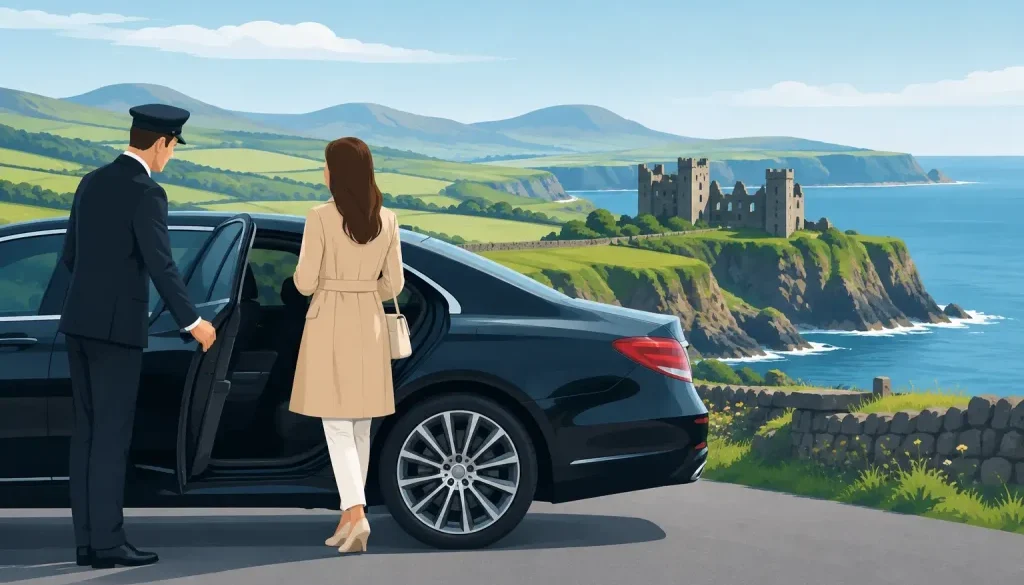
A rain shower has just passed over the Glens of Antrim. The road shines black between stone walls, a lark is making a brave effort above the wind, and beyond the next bend the sea appears in a great flash of silver. This is precisely the moment when chauffeur driven tours Ireland come into their own. Nobody is squinting at a satnav, worrying about a narrow road or missing the view while searching for a parking space. You are free to look out of the window, listen, ask a question and let the country make its introduction.
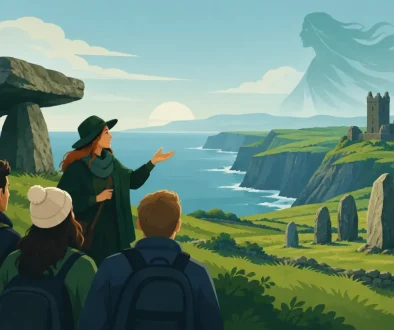
Ireland is small on a map and immense in the telling. A single day can carry you from a monastic shore to a famine workhouse, from a Georgian city street to a mountain pass where an old tale still clings to the stones. The right driver-guide does more than get you there in comfort. They give shape to the journey, with a sense of timing, local knowledge and an ear for the story behind the scenery.
Why chauffeur driven tours Ireland suit curious travellers
A private driven tour is not simply self-drive without the steering wheel. It is a different way of travelling. The practical benefits are plain enough: no navigating unfamiliar roads on the left, no debates over the next turning, no need to appoint a designated driver at lunch. Yet the real pleasure lies in having the headspace to pay attention.
Ireland does not always announce its finest places with a grand sign and a coach park. Sometimes they are tucked down a lane, reached through a village whose name opens a door into Irish language, clan history or a local scandal. A good guide knows when a detour is worthwhile and when a famous attraction will be better enjoyed early, late or not at all.
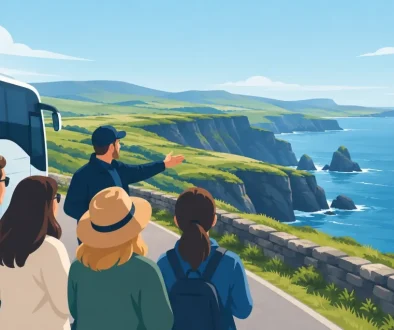
That matters particularly on the Atlantic coast. Weather changes its mind regularly, and a rigid timetable can turn a day of glorious possibility into a procession of damp photographs. A chauffeur-guide can read the conditions, alter the order of the route and find the sheltered church, excellent pub fire or extraordinary viewpoint that suits the day at hand.
Comfort is only half the journey
For couples, families and small groups, travelling by limousine or comfortable small coach brings a civilised rhythm to a full day. There is room for coats, cameras and the odd purchase from a craft studio. There is no need to pack up and unpack at every stop. And when evening arrives, everyone has enjoyed the day equally, including the person who might otherwise have spent six hours concentrating on bends, hedges and oncoming traffic.
But comfort alone is not culture. A vehicle may be handsome and the itinerary impeccably timed, yet still leave visitors with little more than a list of places visited. The difference is interpretation. Why does a ruined abbey matter? Who wrote the poem on the memorial? What did partition mean in this particular town, to these particular families? Why is a holy well still decorated with ribbons?
These questions turn a scenic drive into a journey with texture. Ireland has an exceptional gift for carrying memory in its landscape, though it seldom presents that memory in neat chronological order. Viking ports, plantation towns, famine roads, republican murals, ancient pilgrimage routes and rock-star public houses can all appear within a few miles of one another. A thoughtful guide makes the connections without reducing a complicated country to a string of convenient clichés.
The luxury of a conversation
The finest guided days have room for conversation. Perhaps you are interested in a grandparent from Donegal, Yeats and Sligo, early Christianity, the Troubles, traditional music or the peculiar political life of the border. Say so. A private tour should bend towards genuine curiosity, not insist that every guest receive the same prepared speech at the same lay-by.
That said, personalisation has sensible limits. Roads take the time they take, favourite places can be a fair distance apart, and a day crammed with ambitions can become an endurance test. The art is to choose a strong thread and follow it well. A literary day may include landscape, music and political history along the way, but it should still feel like a story rather than a shopping trolley of sights.
What a well-curated Irish tour feels like
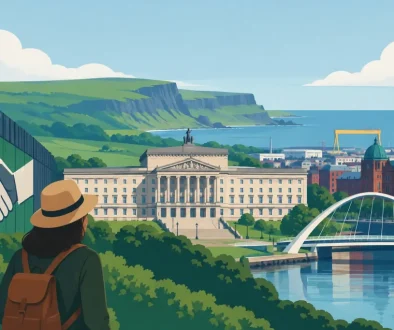
The best routes have a beginning, middle and end. You might leave Belfast with the industrial confidence of the old shipyard in mind, travel through the political geography of the north, then arrive at the Causeway coast where basalt, myth and Atlantic weather take over. Or you might cross Donegal by way of the Grianán of Aileach, hearing of ancient kingdoms before descending towards a coastline that feels, even now, agreeably remote.
Along the way, sound can do what a guidebook cannot. A recording of a local singer, a line of Seamus Heaney, a rebel ballad placed carefully in historical context, or the voice of someone recalling a vanished way of life can change the atmosphere inside the vehicle. Used with care, music and archive material are not decoration. They are a way of allowing the past to speak in its own accents.
This is part of the glory of the story. Ireland’s history includes beauty and brilliance, but it also includes dispossession, conflict, migration and loss. Visitors deserve an account that is lively without being glib, and candid without becoming a lecture. Humour helps. So does knowing when to stop talking and let a landscape, a graveyard or a stretch of open sea have its own say.
Choosing the right chauffeur-guide
Not every traveller wants the same level of commentary. Some prefer an energetic, talkative day; others want informed company with long, companionable stretches of quiet. It is worth discussing this before you travel, along with mobility, dietary needs, special interests and how much walking feels pleasurable rather than dutiful.
Ask how flexible the itinerary is, what sort of vehicle is proposed, how many hours the day is likely to involve and whether admissions, meals or accommodation arrangements are included. ‘Private’ can mean very different things in the travel trade. It may mean a wholly tailored experience, or merely a vehicle reserved for your party while the day remains largely fixed.
There is also a difference between a driver and a driver-guide. A skilled professional driver is invaluable, especially for larger groups. A driver-guide adds historical knowledge, local relationships and the ability to interpret places as they arise. For smaller parties, that combination can be wonderfully intimate. For a larger group or a particularly specialist subject, a separate guide may be the better arrangement.
Racontour approaches this work as cultural companionship rather than transport with commentary. The aim is not to fill every mile with facts, but to bring together roads, voices, poetry, folklore and lived local knowledge in a manner that feels both informed and human.
Leave room for the unscripted
The great temptation when planning Ireland is to attempt the whole sacred isle in a week. Dublin, Galway, Kerry, the Cliffs, the Giant’s Causeway, Donegal, castles, distilleries, ancestral homes – the list can grow until the holiday resembles a military campaign. A chauffeur-driven itinerary offers a better possibility: choose fewer regions and experience them more fully.
Linger over lunch where the seafood was landed that morning. Walk a headland rather than merely photographing it through a windscreen. Spend time in a small museum whose volunteer has a story that will not appear in any brochure. Allow for the unexpected closed gate, the sudden burst of sun, the village festival or the recommendation from a publican who knows exactly where the bluebells are out.
A good journey is not measured by how many pins appear on a map. It is measured by what stays with you afterwards: a tune heard on a coastal road, a phrase of Irish, a story of a local heroine, the hush of an old chapel, the sight of peat smoke lifting into evening air. Let the road take its time. Ireland has been waiting a long while to tell you its tale.